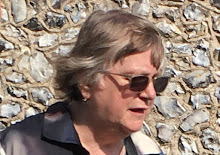
A talk in two parts at All Age Worship. Not that anybody there was under 50, but they seem to have enjoyed it and got something from it.

I do apologise for the appalling coughing fit I was struck with at the end of the first part of the sermon! No idea what got to me, but something did. I should fast forward past that point, were I you!
Once upon a time, long, long ago, a boy was born in a small town in
Scotland. His name was Maewyn Succat. For the first sixteen years
of his life he grew up in a happy and stable family, but when he was
sixteen, something dreadful happened! Pirates raided his village,
and carried Maewin, and probably other boys, too, off into slavery in
Ireland.
And for six whole years, Maewin had to belong to someone else, not free to be his own person. He was very lonely, so he turned to God for help, and learnt to love God and to pray pretty much constantly, listening to God and chatting to him.
After six years, though, Maewin was able to escape to France, where he spent many years studying and learning what the great Christian fathers had thought and taught about Jesus. Sometime during those years he was baptised, and took the name we know him by best: Patrick. He was ordained a priest, and then made a Bishop, and then God called him to go back to Ireland – the place where he had been a slave, remember? And he went, and spent the next 30 years or so telling the people of Ireland about God, and about Jesus. He died on 17 March in the year 462, and is buried in the grounds of Down Cathedral. And every year, we celebrate him on 17 March. In America they even dye their rivers green, and their beer! And some of us – me included – like to wear something green, just because.
But there’s more to celebrating St Patrick than that! Patrick trusted God, and wrote a lovely prayer, now turned into a rather long hymn. I quoted four lines right at the start of the service, and here is another verse.
I bind unto myself today
The power of God to hold and lead,
His eye to watch, his might to stay,
His ear to hearken to my need.
The wisdom of my God to teach,
His hand to guide, his shield to ward,
The word of God to give me speech,
His heavenly host to be my guard.
Patrick trusted God, and looked after God’s people in Ireland. We are going to sing a hymn reminding us to look after God’s people wherever we find them. “Brother, sister, let me serve you”. It’s number 611 if you want to use the hymn book.
Apart from St Patrick, today is all about butterflies!
First of all, we are going to watch a video,
telling us a story you know very well –
you probably remember it being read to you, or perhaps you read it to younger brothers and sisters, or to your own children.
So the caterpillar became a beautiful butterfly.
But before he became a butterfly, there was an intermediate stage.
He built a cocoon around himself.
He became a pupa.
That isn’t just a matter of hibernating, like a dormouse or bear;
to become a butterfly, caterpillars have to be completely remade.
While they are in the pupa, all their bits dissolve away,
and are made from scratch, from the material that is there.
It’s not just a matter of rearranging what is there,
it’s a matter of total breakdown and starting again.
The caterpillar more-or-less has to die before it can become a butterfly.
That's really scary.
But it's also very appropriate as we enter the season called Passiontide.
Jesus said, “Unless a grain of wheat falls into the earth and dies,
it remains just a single grain;
but if it dies, it bears much fruit.”
Jesus knows that he is going to die.
He is dreading it. He was, after all, human.
We wouldn’t like it if we knew we were to be put to death tomorrow.
I once dreamed that I was going to be executed, and I can’t tell you how frightened I was!
I was so relieved to wake up and find that it was all a dream.
The farmers were sowing their fields.
Jesus knew, perhaps, that he would not live to see the crops grow.
But he knew that they would grow.
And, more importantly, he knew that they would not grow if they were not sown,
if they remained in their basket, they might germinate,
but they would rot away almost at once.
Or, if they were kept in very dry conditions, they might remain viable for years, but nothing would happen.
The seeds had to die.
The birds, at that time and in that place, were building their nests and laying their eggs.
But the eggs couldn’t remain as eggs –
they would addle and be no good to anybody.
The young birds had to grow inside the eggs,
and then they must force their way out or they would die.
Jesus could see the caterpillars that were hatching from the eggs laid last year.
He knew, I expect, that they had to become pupae before they could be butterflies.
Someone he knew had had a baby lately;
Jesus remembered this:
“When a woman is in labour, she has pain, because her hour has come.
But when her child is born, she no longer remembers the anguish because of the joy of having brought a human being into the world.”
Jesus saw all this and knew that from seeming dissolution, God brought new life.
He knew that he would have to die, so that new life could come.
Perhaps at that stage he didn’t really know how this would happen.
He knew that it must happen, but not how it would.
We know that God raised Jesus from death, and because of that, we have eternal life.
But that didn't stop it being really scary for Jesus.
You remember how he spent all night in the park, praying that God would make him not have to go through with it.
But he had to, and he knew he had to.
Because if he hadn’t died, he could not have been raised from the dead, and could not have made us right with God.
I expect St Patrick was very scared when he was sold into slavery.
We know that he was very lonely, so he learnt to pray, and turned to God for comfort.
And then, when he was able to leave Ireland and go to France,
that must have been scary, too.
However much he hated Ireland, change is always scary,
and he didn’t know what France was going to be like.
And I should think he was even more apprehensive when God asked him to go back to Ireland and bring the Good News of Jesus to the people there.
But Patrick did what God asked him to do.
He said “Goodbye” to his old life;
he died to it, if you like, and went bravely ahead into the new life God was calling him to.
Jesus did what God asked him to do.
We are just beginning the season called Passiontide, when we think about how Jesus went forward to his death, and through death to the glorious resurrection we will be celebrating on Easter Day.
But what does it mean for us?
Are we facing any changes in our lives?
Life is full of change, isn’t it?
Some changes are gradual, others sudden.
Some –
many, perhaps, are expected;
others come out of the blue.
But even the expected changes can be frightening –
it’s scary to move out of your parents’ home and live on your own for the first time, for instance.
And growing old is most definitely not for wimps!
But we know we have to grow and change;
we can’t stagnate, any more than an egg can stay and egg,
or a caterpillar not transform into a butterfly.
But the joy of it is, Jesus was there first!
Here, again, is St Patrick:
Christ be with me, Christ within me,
Christ behind me, Christ before me,
Christ beside me, Christ to win me,
Christ to comfort and restore me,
Christ beneath me, Christ above me,
Christ in quiet, Christ in danger,
Christ in hearts of all that love me,
Christ in mouth of friend and stranger.
As we face changes and new growth in our lives, let’s pray that we learn to recognise Christ in all around us, as Patrick tried to do. Amen.
And for six whole years, Maewin had to belong to someone else, not free to be his own person. He was very lonely, so he turned to God for help, and learnt to love God and to pray pretty much constantly, listening to God and chatting to him.
After six years, though, Maewin was able to escape to France, where he spent many years studying and learning what the great Christian fathers had thought and taught about Jesus. Sometime during those years he was baptised, and took the name we know him by best: Patrick. He was ordained a priest, and then made a Bishop, and then God called him to go back to Ireland – the place where he had been a slave, remember? And he went, and spent the next 30 years or so telling the people of Ireland about God, and about Jesus. He died on 17 March in the year 462, and is buried in the grounds of Down Cathedral. And every year, we celebrate him on 17 March. In America they even dye their rivers green, and their beer! And some of us – me included – like to wear something green, just because.
But there’s more to celebrating St Patrick than that! Patrick trusted God, and wrote a lovely prayer, now turned into a rather long hymn. I quoted four lines right at the start of the service, and here is another verse.
I bind unto myself today
The power of God to hold and lead,
His eye to watch, his might to stay,
His ear to hearken to my need.
The wisdom of my God to teach,
His hand to guide, his shield to ward,
The word of God to give me speech,
His heavenly host to be my guard.
Patrick trusted God, and looked after God’s people in Ireland. We are going to sing a hymn reminding us to look after God’s people wherever we find them. “Brother, sister, let me serve you”. It’s number 611 if you want to use the hymn book.
---oo0oo---
Apart from St Patrick, today is all about butterflies!
First of all, we are going to watch a video,
telling us a story you know very well –
you probably remember it being read to you, or perhaps you read it to younger brothers and sisters, or to your own children.
So the caterpillar became a beautiful butterfly.
But before he became a butterfly, there was an intermediate stage.
He built a cocoon around himself.
He became a pupa.
That isn’t just a matter of hibernating, like a dormouse or bear;
to become a butterfly, caterpillars have to be completely remade.
While they are in the pupa, all their bits dissolve away,
and are made from scratch, from the material that is there.
It’s not just a matter of rearranging what is there,
it’s a matter of total breakdown and starting again.
The caterpillar more-or-less has to die before it can become a butterfly.
That's really scary.
But it's also very appropriate as we enter the season called Passiontide.
Jesus said, “Unless a grain of wheat falls into the earth and dies,
it remains just a single grain;
but if it dies, it bears much fruit.”
Jesus knows that he is going to die.
He is dreading it. He was, after all, human.
We wouldn’t like it if we knew we were to be put to death tomorrow.
I once dreamed that I was going to be executed, and I can’t tell you how frightened I was!
I was so relieved to wake up and find that it was all a dream.
The farmers were sowing their fields.
Jesus knew, perhaps, that he would not live to see the crops grow.
But he knew that they would grow.
And, more importantly, he knew that they would not grow if they were not sown,
if they remained in their basket, they might germinate,
but they would rot away almost at once.
Or, if they were kept in very dry conditions, they might remain viable for years, but nothing would happen.
The seeds had to die.
The birds, at that time and in that place, were building their nests and laying their eggs.
But the eggs couldn’t remain as eggs –
they would addle and be no good to anybody.
The young birds had to grow inside the eggs,
and then they must force their way out or they would die.
Jesus could see the caterpillars that were hatching from the eggs laid last year.
He knew, I expect, that they had to become pupae before they could be butterflies.
Someone he knew had had a baby lately;
Jesus remembered this:
“When a woman is in labour, she has pain, because her hour has come.
But when her child is born, she no longer remembers the anguish because of the joy of having brought a human being into the world.”
Jesus saw all this and knew that from seeming dissolution, God brought new life.
He knew that he would have to die, so that new life could come.
Perhaps at that stage he didn’t really know how this would happen.
He knew that it must happen, but not how it would.
We know that God raised Jesus from death, and because of that, we have eternal life.
But that didn't stop it being really scary for Jesus.
You remember how he spent all night in the park, praying that God would make him not have to go through with it.
But he had to, and he knew he had to.
Because if he hadn’t died, he could not have been raised from the dead, and could not have made us right with God.
I expect St Patrick was very scared when he was sold into slavery.
We know that he was very lonely, so he learnt to pray, and turned to God for comfort.
And then, when he was able to leave Ireland and go to France,
that must have been scary, too.
However much he hated Ireland, change is always scary,
and he didn’t know what France was going to be like.
And I should think he was even more apprehensive when God asked him to go back to Ireland and bring the Good News of Jesus to the people there.
But Patrick did what God asked him to do.
He said “Goodbye” to his old life;
he died to it, if you like, and went bravely ahead into the new life God was calling him to.
Jesus did what God asked him to do.
We are just beginning the season called Passiontide, when we think about how Jesus went forward to his death, and through death to the glorious resurrection we will be celebrating on Easter Day.
But what does it mean for us?
Are we facing any changes in our lives?
Life is full of change, isn’t it?
Some changes are gradual, others sudden.
Some –
many, perhaps, are expected;
others come out of the blue.
But even the expected changes can be frightening –
it’s scary to move out of your parents’ home and live on your own for the first time, for instance.
And growing old is most definitely not for wimps!
But we know we have to grow and change;
we can’t stagnate, any more than an egg can stay and egg,
or a caterpillar not transform into a butterfly.
But the joy of it is, Jesus was there first!
Here, again, is St Patrick:
Christ be with me, Christ within me,
Christ behind me, Christ before me,
Christ beside me, Christ to win me,
Christ to comfort and restore me,
Christ beneath me, Christ above me,
Christ in quiet, Christ in danger,
Christ in hearts of all that love me,
Christ in mouth of friend and stranger.
As we face changes and new growth in our lives, let’s pray that we learn to recognise Christ in all around us, as Patrick tried to do. Amen.