Audio is only available from January 2021 onwards.
Showing posts with label 33 in Ordinary Time A. Show all posts

15 November 2026

Talents, revisited


Our Gospel story for today is a very familiar one. It’s one of the ones we probably learnt in Sunday School. Maybe our teachers urged us to use our God-given talents in God’s service, and quite right too – we should.

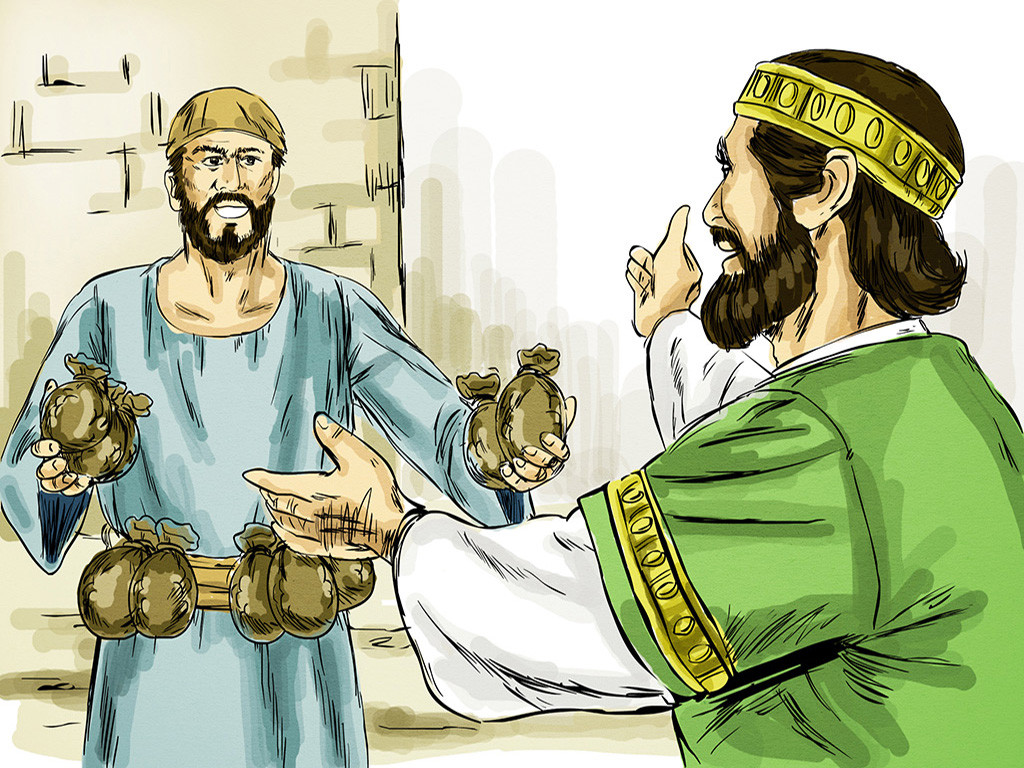
But a “talent”, in the way Jesus meant it, had nothing to do with our skills and abilities. Instead, it meant money. Serious money. It was their word for the sort of money it would take the likes of you and me twenty years to earn, although of course the billionaires of this world would earn it in about ten minutes. That sort of money. And the master is going away, and gives very serious money to his slaves – five talents, two talents or one talent.
And two of the slaves go off and go into business for themselves, and double their money. But the third one is afraid of losing it, so he buries it in the ground and gets on with his life. And then one day, the master comes back. And the two servants, who had probably got rich on their own account as well as making money for their master, come swanning up with all the trappings of wealth and power, and their master is really pleased with them. But the third one comes up and presents his master with the original money, totally untouched, saying “Master, I knew that you were a harsh man, reaping where you did not sow, and gathering where you did not scatter seed; so I was afraid, and I went and hid your talent in the ground. Here you have what is yours.”  And the master is furious with him.

Traditionally, of course, we identify the master with God. And in many of Jesus’ stories, of course, that’s exactly what we’re supposed to do. But in many more, the protagonist, the master, isn’t at all like our loving Father. I don’t really see God throwing out one of his followers who hadn’t made the most of their opportunities, do you? We might be asked to explain ourselves, but we would not be excluded.

Last week, we read the story of the wise and foolish bridesmaids, the ones who had thought to refill their lamps, and the ones who hadn’t. Again, the ones who hadn’t thought were condemned and left out. And, as one of our Sunday School pointed out, the others weren’t reprimanded for not sharing their oil, either. Again, does this sound like God?

And there’s the story of the unjust judge, who had no time for either God or man, but who eventually gave in to the persistent widow. Or the king who burnt down a city when the inhabitants had violently refused an invitation to his party – and who bound and cast out the one who came wearing the wrong clothes. Again, doesn’t sound like God.

So, what if the master, in this story, isn’t God? Back in the day, people who made money made it at the expense of others – moneylenders, perhaps, who charged an extortionate rate of interest; tax collectors who skimmed off far more than their fair share; the moneychangers in the Temple, who gave a really crap rate of exchange. That sort of person. And another thing – you weren’t supposed to accumulate such a horde of wealth as this millionaire apparently had. Especially not if you got it by exploiting the poor.

So we have this incredibly wealthy man. Perhaps in our day he would be an arms dealer, or a drugs lord. And maybe, when he had to “go away”, he was going to prison, or perhaps he’d made too many enemies and needed to get away for a bit, or perhaps he just wanted a long, long holiday; whatever, he gave his money to his servants to look after for him. And the first two are every bit as bad as their master, and carry on his business for him, doubling their original investment, and becoming more like him as the years go by. While the third servant decides that he will have nothing to do with this evil trade, and now is his chance to do something else with his life. Something right, and good, and proper. He doesn’t put the money in the bank, because earning interest isn’t something that good Jews did – Muslims don’t, to this very day, of course. And certainly not usury – excessive rates of interest. So no, he buries the money, which was a perfectly acceptable thing to do, back in the day, and goes and does something else. But he is honest, so at the first possible opportunity, he returns his master’s money – every penny – and at the same time denounces his sharp practices, reaping where he did not sow, and so on.

So, I wonder what you think? Could it be that the third servant, the one we’ve always been taught was lazy and dishonourable, was actually the hero of the story all along? He was the one who stood out against the dishonest financial practices. What if the other two, far from being virtuous types who made the most of their opportunities, what if they were just as bad as their master, out for all they could get, not caring who they hurt in the process? Maybe they, too, dealt drugs. Or sold arms. Or built sub-standard housing stock at vastly inflated prices. Or… well, I’m sure you can think of loads of ways they could have made their money that weren’t exactly ethical.

In John Wesley’s sermon on the uses of money, the one where he famously says to earn all you can, save all you can and give all you can, he specifically says not to earn your money in unethical ways – don’t get involved in moneylending or selling drugs, or whatever. And don’t hoard. Save all you can, yes, but give away that which you don’t really need. Just exactly what the master and the first two servants weren’t doing.

So if number 3 is the hero, what does this say to us? He was the one abused and cast out. But he did what was right, and when it mattered, he spoke truth to power – and paid a heavy price for it.

There have been many down the years who have done just that. Who have refused to conform to the standards of their world. Who have spoken truth to power, and may well have paid for it. I’m thinking of people like Gandhi, or Nelson Mandela, or, more recently Greta Thunberg or Malala Yousafzai. Those women who have spoken of the powerful men who have abused them, and maybe threatened them if they didn’t keep quiet.

Next week, we’ll be reading the rest of this chapter in Matthew’s Gospel, were Jesus talks about separating the sheep from the goats, the ones who looked after those in need and the ones who didn’t. I’m not going to get into that now, but it’s all part of the same thing, isn’t it? Doing the right thing. Not conforming to this world. Not behaving according to this world’s standards.

St Paul said that, didn’t he? In his letter to the Christians in Rome: “Do not be conformed to this world, but be transformed by the renewing of your minds, so that you may discern what is the will of God – what is good and acceptable and perfect.”

Be transformed. Please note, it’s “Be transformed”, not “transform yourselves”. It’s not really something we can do for ourselves, it is something we must allow God to do for us. And it takes time. We know, from Jesus’ teachings, what God’s people are going to be like, what we ought to be like: not getting angry for no good reason, and not putting other people down if they are angry with them; not valuing others just for their bodies, or treating them as if they were no more than their bodies; not getting divorced for trivial reasons; not swearing oaths but being so trustworthy that “Yes” or “No” is enough; and so on. In short, they will – we will – treat other people with the greatest possible respect for who they are. We are not going to make a profit at other people’s expense. We’re not going to ignore poverty and suffering. We’re going to share at least part of our wealth with those in need, ideally through established channels like the Robes project or the Methodist “All We Can”.

None of this is easy, and I don’t pretend it is. But with God’s help we will gradually become the people we were meant to be. The people who have integrity, and, despite being afraid, despite paying the price, are given the courage to speak truth to power when it matters.

Of course, you may well disagree with this interpretation of the story, and that’s fine, too. But if you think – and you may well be right – that the heroes of the story are the two servants who took what they were given and made the most of it, then you will need to pray to be enabled to make the most of what you have, of the many gifts God has given you. Actually, we all need to do that, whatever we think of this story! And, too, we need to pray that, when and if the time comes, we will be given the courage to stand out against the world, to do what is right, to speak truth to power – and, if we have to, to pay the price. Amen.

19 November 2023

It's what you do with it that counts.

 The recordings are from two services; firstly an abridged version for Night Prayer on 15 November, and then the longer version for 19 November.


I often quail when I’m faced with a very familiar Gospel story to preach on,
as I never know whether I shall be able to say anything that you haven’t heard a million times before.

This story is a very old friend –
most of us, I expect, have known it since our nursery days.
Indeed, it is –
or used to be –
often employed by teachers and so on to push children on to practice and work hard.
If God has given you talents, they say,
then you must work to make the absolute very best of them.

But, of course, it isn’t so much about talents in that sense –
although it can be taken that way.
It’s about money.
Or at least, in Jesus’ story it’s about money.
I think it’s also about other things, too,
but we’ll come to that in a minute.

A talent was serious money back then.
Maybe about twenty years’ wages for your average labourer;
maybe more.
Serious money.
So the master was not messing about when he asked his slaves to look after it for him.
One slave was given five talents, another two and the third just one.
I suppose in these days they would be share portfolios,
and the slaves would be young investment bankers or stockbrokers or something like that.

In many ways, I prefer Luke’s version of this story,
where each of the slaves are given the same amount of money,
and come back with different amounts.
But today we have Matthew’s version set in the lectionary, so let’s go with that.
The master goes away, for whatever reason, and shares out the money.
And then he goes away, and doesn’t come back and doesn’t come back.
Maybe he is away for months, maybe years, maybe even a decade or more:
the text just says “A long time”.
And while he is away, things happen.
The first and second servants both go into business for themselves using their unexpected capital.
Perhaps they deal on the stock exchange.
Perhaps they open up a business of some kind –
a restaurant, say, or buying and selling houses.
We’re just told they traded with their money.

I expect they made themselves seriously rich, too.
They would have felt able to pay themselves a good salary,
while all the time preserving and adding to their Master’s capital.

But what of Number 3?
He’s quite comfortable already, thank you.
He has a good, secure job;
he would really rather be employed by someone than go into business for himself.
It doesn’t occur to him that, of all the slaves,
he was the one chosen to see what he would do,
whether he would have the courage to invest that capital.
And in any event, he doesn’t have that sort of courage.
Supposing something went wrong and he lost it all?
The consequences don’t bear thinking about!
Better play safe.
Very safe.
Not the bank –
not with the current banking crisis, just look at Northern Rock!
Okay, maybe his money would be safe,
but he wouldn’t be comfortable thinking about it, just in case it wasn’t.
Better just dig a hole in the ground and pretend you’re planting carrots or potatoes.
So that’s what he does;
the sort of moral equivalent of putting it into
old sock under his mattress, or in his underwear drawer.
And he gets on with his life.

And then, one day, the Master comes back.
I wonder whether they had ever really expected that he would,
or if they had almost forgotten they weren’t in it for themselves.

And the first and the second servant come swanning up with all the trappings of wealth –
chauffeur-driven Rollers,
Philippe Patek watches,
Louis Vuitton briefcases,
noses down in the latest top-of-the-range smartphones,
and, finally, able to present the Master with
share certificates
and bank statements
and other records of profit and loss to show him that they had each doubled their investments.

The Master is delighted.
“Well done, you good and faithful servant.” he says to each of them.

“You’ve been faithful in little things” –
not that little;
a “talent” was, as I said, serious money –
“now you’ll be put in charge of great things.
Enter in to the joy of your Master!”

And then along comes the third servant.
On a pushbike.
And he presents his master with a filthy dirty and rather crumpled envelope containing the original bankers’ order.
“I couldn’t face it, Master!” he explains.
“supposing it had all gone wrong
What would you have said to me?
You’re very harsh, and you do like your people to make you lots of money,
and I was too scared to try.
So I have kept it safe, and here you are!”

And the Master is seriously annoyed!
“Oh, look here!” he said.
“So you didn’t want to play the stock market or start a business, okay,
but couldn’t you at least have put it on deposit somewhere for me,
so I could have had the interest?
Just not good enough, I’m afraid.
Take him away!”

This story takes place in God's country, the Kingdom of Heaven.  I often think that Jesus struggles slightly when talking about the Kingdom,
trying to find an illustration that would make sense to his hearers,
talking of the tiny grain of mustard seed that grew to become
a huge shrub,
or the tiny bit of yeast that was needed to make the dough rise.
And as I'm sure you know, these stories didn’t say to us quite what they said to Jesus’ first hearers,
as mustard was a terrific weed, like stinging-nettles,
and nobody in their right mind would plant it deliberately.
And yeast –
or sourdough, more probably –
was not really associated with people of God,
since what you had at the holy feasts was unleavened bread,
which was then, by association, considered slightly more “proper” than ordinary bread.
And the thought of a woman baking it may well have turned people up a bit –
women tended to be rather “non-persons” in those days.

And, actually, it’s the same here.
Particularly for the third slave –
you what?
He should have put his money in the bank​?
To earn
interest?
I don’t think so!
Jewish people in that time and place took very seriously the commandment that “thou shalt not lend out thy money upon usury”.
So here is the master telling the slave that he should have done just that?
Yikes!

So what does it all mean?
This whole story comes in a section of teaching about the End Times,
something we don’t really like to think about these days.
Jesus has been saying that nobody, not even he, knows the day and hour –
there will be all sorts of signs and symbols and symbolism, but they don’t necessarily mean anything.
And people will say “Oh, Jesus is coming on
this date,” or “the end of the world is coming on that date”, but not to believe them.

He says nobody knows when it will happen –
and these days, increasingly, it’s or even if it will happen –
but the idea is to be prepared.
“Who,” Jesus asks,
“are faithful and wise servants?
Who are the ones the master will put in charge of giving the other servants their food supplies at the proper time?
Servants are fortunate if their master comes and finds them doing their job.
You may be sure that a servant who is always faithful will be put in charge of everything the master owns.”

And the Gospel for last week –
although you may not have thought about it as it was Remembrance Day –
was the story of the wise and foolish virgins,
and whether you would rather be with the wise virgins in the light,
or the foolish virgins in the dark....
well, not quite that, but you know what I mean.
Again, the sensible girls were prepared and ready –
the silly ones hadn’t even thought they might need to light lamps if it got late.

So again, Jesus is trying to draw pictures of things that don’t go into words very well;
he’s trying to make his hearers understand what it’s going to be like,
when he himself doesn’t have a very clear picture of it.
But one thing he does know –
we need to live as if he were never coming back,
but be prepared for him to return any second now!
It’s one of those Christian paradoxes that our faith is so full of.

It’s not just about what we do with our money, or with our time –
although obviously we need to make sure we are good stewards of both.
It’s maybe more, I think, about what we do with our relationship with God.

We are all, I expect, Christians here;
all people who enjoy a reciprocal relationship with their Creator.
And some people make the most of it!
Most of us do, I am quite sure.
We make a point of learning who we are, so we can be honest with God,
we make a point of learning from the Bible who God is,
and making a point of developing the relationship by spending time with God each day.
We don’t find it easy –
nothing worthwhile ever is easy –
and, of course, the ones who are really expert at it tend to make it look easy, which tends to make us feel inadequate.
But, of course, most of what we do to grow as a Christian is actually done by God;
our job is to be open to being grown –
and to use the “means of grace” that we have been given to do that.

But there are others around –
not here, I don’t suppose, not for one moment –
but I’m sure we know people who joyously responded to God’s call upon their life –
and then got stuck.
Didn’t grow, didn’t, maybe, even want to grow and change.
Stayed as baby Christians, still drinking milk when they should have been weaned on to meat, as St Paul puts it.
And maybe, one day, they will have to explain themselves, too.
“You had all these opportunities to become the person you were meant to be, but you wasted them.
Why?”

The good slaves, in this story, took what they were given and doubled it.
The bad one didn’t want to know, and buried his money.
It’s a picture –
and only a picture –
and must be taken alongside the other pictures we have of the end times.
But nevertheless, it is a picture we probably need to take seriously.
We need to allow God to work in us, to make us the people we have the potential to be, and maybe even to make us more than that.
We need to become what we can become, in God.
Much has been given to us already;
now we need to be open to God working in us.
Amen.